
Lantern Craft: Oriental Light & Folk Customs

Lantern Craft: Oriental Light and Shadow Illuminating Millennia, A Festive Art Carrying Folk Customs.
In the brilliant scroll of traditional Chinese folk culture, lantern craft stands as a vivid art form that weaves together millennia of festive memories and aesthetic pursuits, with “lantern as its shape, light as its soul, and craftsmanship as its backbone”. This traditional craft, which integrates bamboo frame weaving, colored paper pasting, and painted decoration, has brightened life with its colorful light and shadow—from imperial lantern festivals to folk markets, from sacrificial rituals to daily decorations. Today, it still conveys the unique charm of China’s “lantern culture” to the world with its warm glow.
The history of lantern craft can be traced back to the Western Han Dynasty, when the prototype of “Lantern Appreciation on the Lantern Festival” emerged in the imperial court. When Emperor Wu of Han offered sacrifices to the Supreme God on the 15th day of the first lunar month, he lit lanterns to pray for blessings, forging the connection between lanterns and festivals. After Buddhism was introduced to China in the Eastern Han Dynasty, the custom of “lighting lanterns to honor the Buddha” merged with Lantern Festival lantern appreciation. Lanterns then spread from the imperial court to the people, and their scale gradually expanded. The Tang Dynasty marked the golden age of lantern craft development: the Lantern Festival in Chang’an, the capital, saw “a thousand doors unlocked and ten thousand lanterns glowing”. Lantern designs broke free from traditional constraints, with new forms such as revolving lanterns and Kongming lanterns (sky lanterns) appearing. The poet Lu Zhaolin described the grand scene of the lantern festival with the verse: “Connected to the sky, they seem like falling stars; leaning against buildings, they hang like the moon.” In the Song Dynasty, lantern craftsmanship matured. The lantern market in Bianjing (now Kaifeng) featured “forty li of unending lantern light”. Lantern materials expanded to silk, gauze, and colored glaze, and the interactive form of “lantern riddles” emerged, adding fun to lantern appreciation. At this time, “colored glaze lanterns” and “sheepskin lanterns” already combined ornamental and artistic value. During the Ming and Qing dynasties, lantern schools flourished in diverse styles: Beijing palace lanterns were solemn and elegant, Suzhou lanterns were exquisite and delicate, and Guangdong revolving lanterns were lively and vivid. Lanterns from different regions became vivid carriers of local culture.
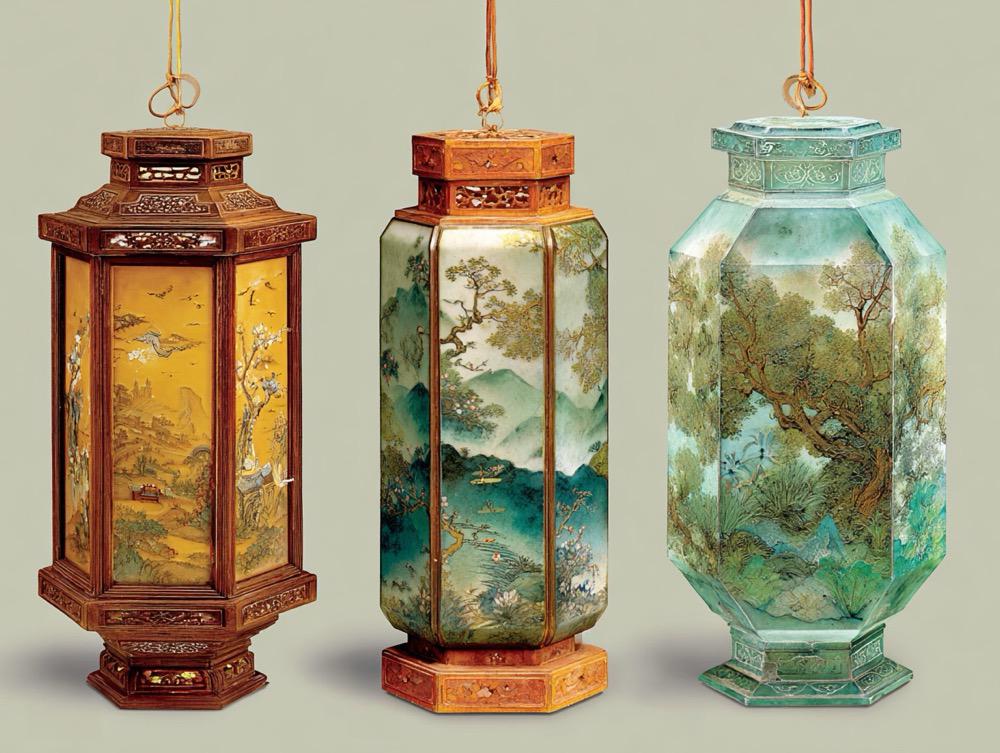
The charm of lantern craft first lies in its exquisite production process of “one bamboo strip, one shape; one piece of paper, one scene”. The core process consists of four major steps: “frame weaving, pasting, painting, and decoration”, each embodying the craftsman’s dedication. “Frame weaving” is the foundation: flexible bamboo strips are selected, split into thin threads, bent by heating, and bound into frames. Different lantern designs require different frame structures—palace lanterns often have hexagonal or octagonal frames for stability and grandeur; revolving lanterns need a rotating axis structure to make the internal images turn with the heat. “Pasting” involves choosing materials based on the lantern’s purpose: traditional lanterns mostly use rice paper or silk gauze, while modern lanterns incorporate silk cloth and acrylic. Pasting must be “smooth without wrinkles and uniform in light transmission” to ensure clear images when the lantern is lit. “Painting” is the soul of the lantern: craftsmen paint patterns on the lantern surface using pigments, with themes covering auspicious motifs (such as “dragons and phoenixes bringing prosperity” and “abundance year after year”), folk stories (such as “The Cowherd and the Weaver Girl” and “The Eight Immortals Crossing the Sea”), and natural scenery (such as landscapes, flowers, and birds). Suzhou lanterns feature “meticulous brush painting” that is delicate and vivid, while Guangdong lanterns use “paper-cut appliqué” for a lively and simple style. “Decoration” enhances beauty through edging, tassels, and additional small lanterns: palace lanterns are often adorned with tassels, and revolving lanterns have rotating images pasted on their walls, creating a scene where “motion contains scenery and scenery carries emotion”.
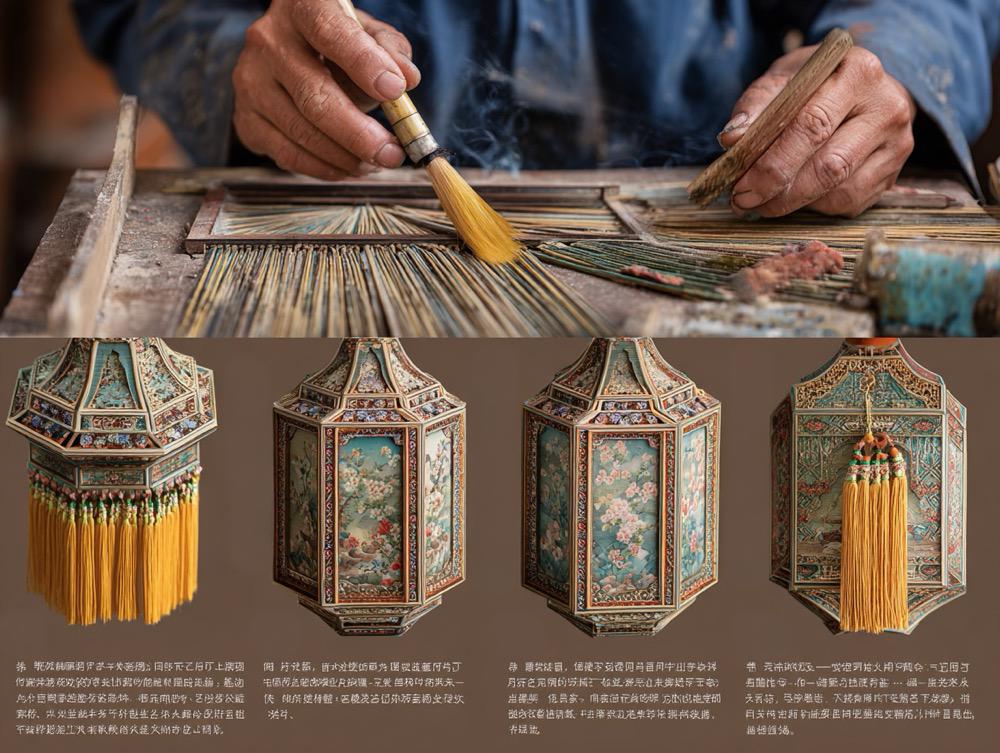
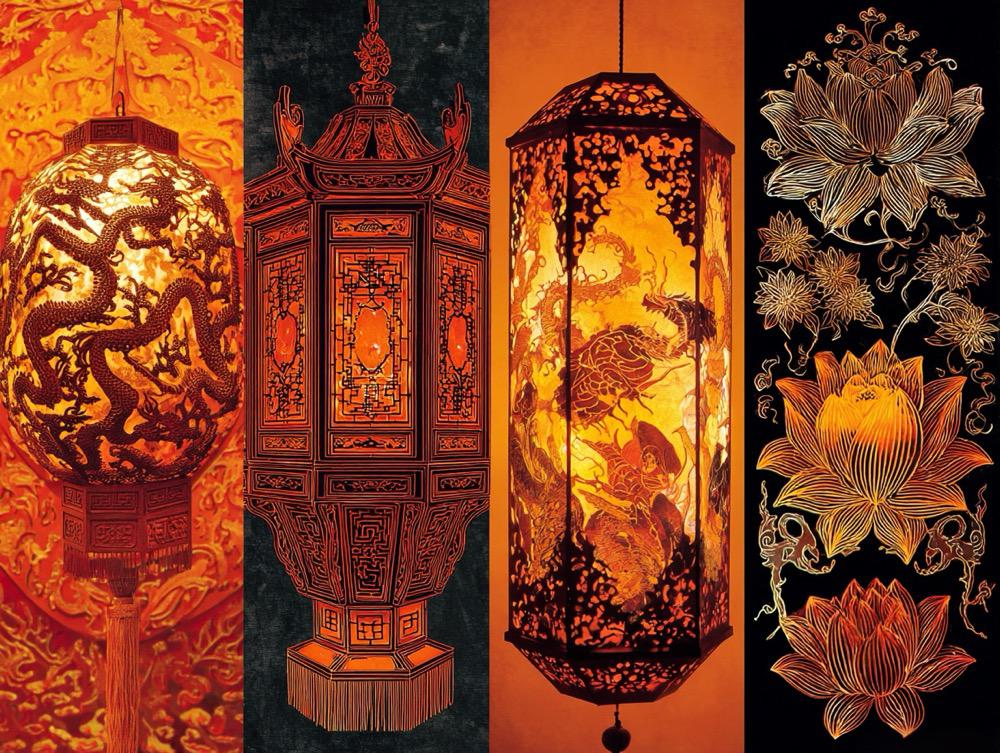
Lantern craft boasts a wide variety of types, with regional schools showcasing distinct characteristics and rich cultural diversity. Beijing palace lanterns are known for their “imperial grandeur”, mostly hexagonal or octagonal, with landscapes and figures painted on their surfaces and wooden carvings decorating their frames. They are often used to decorate palaces and halls, symbolizing solemnity and elegance. Suzhou lanterns excel in “exquisiteness and delicacy”; “rabbit lanterns” and “lotus lanterns” have cute shapes, and their surfaces are mostly painted with meticulous brushwork, showing delicacy in every detail. Guangdong revolving lanterns are characterized by “dynamic fun”: a candle is placed inside, and the heat drives the lantern wall to rotate, unfolding images like a “comic strip”, which is beloved by children. Quanzhou, Fujian’s “paper-cut lanterns” focus on paper-cutting craftsmanship; their surfaces are carved with intricate patterns, and when lit, the light creates interlaced shadows, exuding strong artistic appeal.
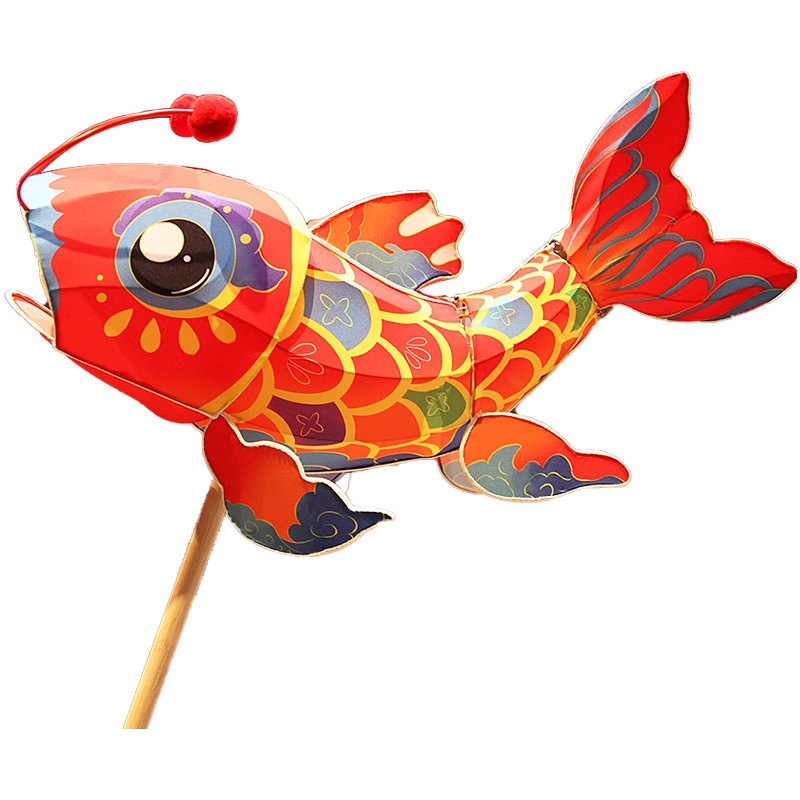
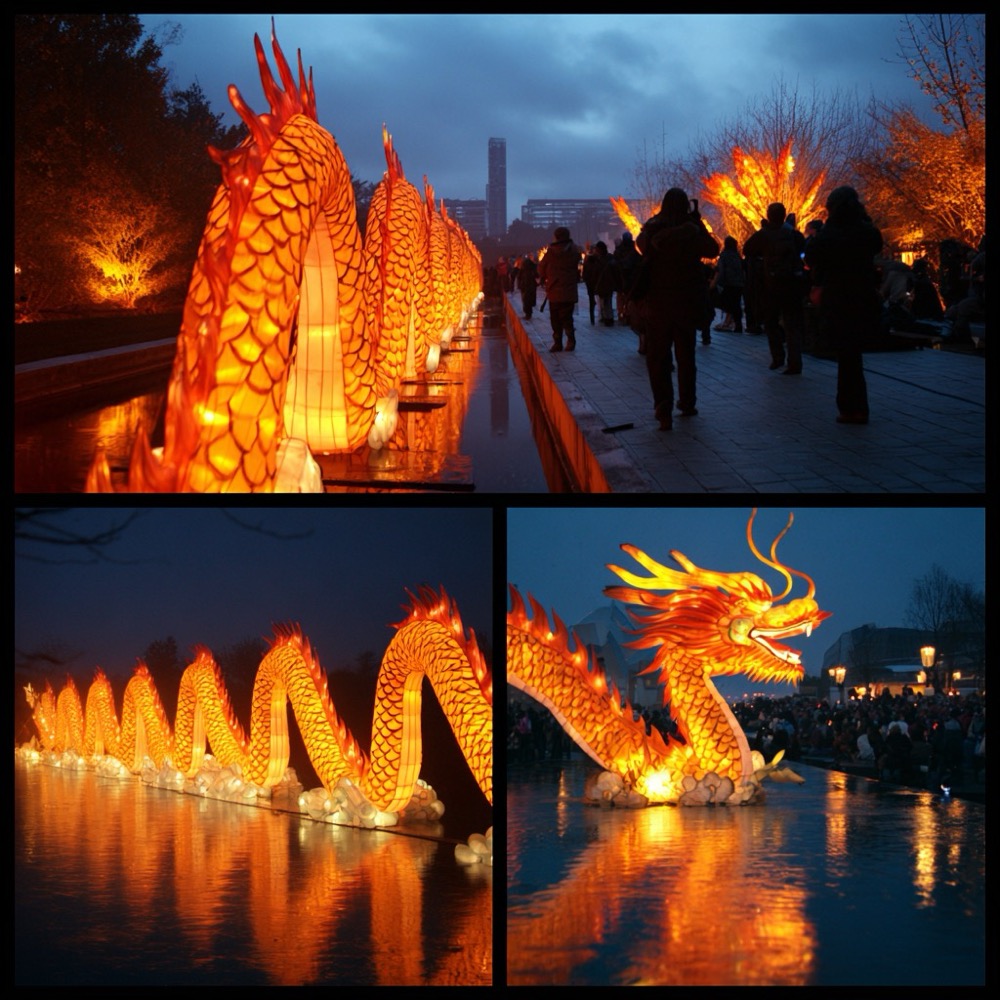
Lanterns are not only festive decorations but also carry profound cultural significance. Among the people, appreciating lanterns on the Lantern Festival is an important custom; “guessing lantern riddles” and “visiting lantern exhibitions” convey good wishes for reunion and blessings. The patterns and shapes of traditional lanterns contain rich folk symbols—for example, “fish lanterns” symbolize abundance year after year, “lotus lanterns” represent purity and auspiciousness, and “dragon lanterns” imply favorable weather for crops. These have become important materials for studying folk culture. Meanwhile, lanterns are envoys of Sino-foreign cultural exchange: as early as the Tang Dynasty, lanterns spread to Central Asia and Southeast Asia along the Silk Road, becoming an important symbol of Oriental culture.
In modern times, lantern craft has not faded with the changes of the times but has gained new vitality through inheritance and innovation. On one hand, traditional lantern craftsmanship is systematically protected: in 2006, “Suzhou Lantern Making Technique” and “Beijing Palace Lantern Making Technique” were successively included in the National Intangible Cultural Heritage List. Lantern museums and inheritance bases have been established in various places, and veteran craftsmen pass down weaving and painting techniques to the younger generation through the “master-apprentice” model. On the other hand, innovations in lantern craft continue to emerge: artists integrate modern technology (such as LED lights and projection technology) into lantern making, making lanterns more energy-efficient, environmentally friendly, and rich in light and shadow effects; new lanterns with anime themes and sci-fi elements are designed to attract young people; international lantern festivals (such as the Shanghai International Lantern Festival) are held, inviting global artists to participate in creation and serving as a platform for Sino-foreign cultural exchange. In addition, lanterns have repeatedly appeared in international events and cultural exhibitions—from the lantern landscapes at the Shanghai World Expo to the lantern exhibitions at the China Cultural Center in Paris, all have allowed the world to experience the charm of Oriental lanterns, making them a cross-border cultural symbol.
From the imperial sacrificial lanterns of the Western Han Dynasty to the folk lantern markets of the Song Dynasty, from the auspicious lanterns of traditional schools to the technologically innovative modern lanterns, lanterns have always carried the Chinese people’s yearning for a better life and commitment to culture with their warm light. They are not only a traditional craft but also a series of vivid historical memories and an enduring cultural heritage. In the new era, with the Oriental light and shadow charm accumulated over millennia, lanterns transcend time, space, and national borders, telling the immortal legend of Chinese folk art to the world.