
Kites: Soaring Romance Image Recommendations

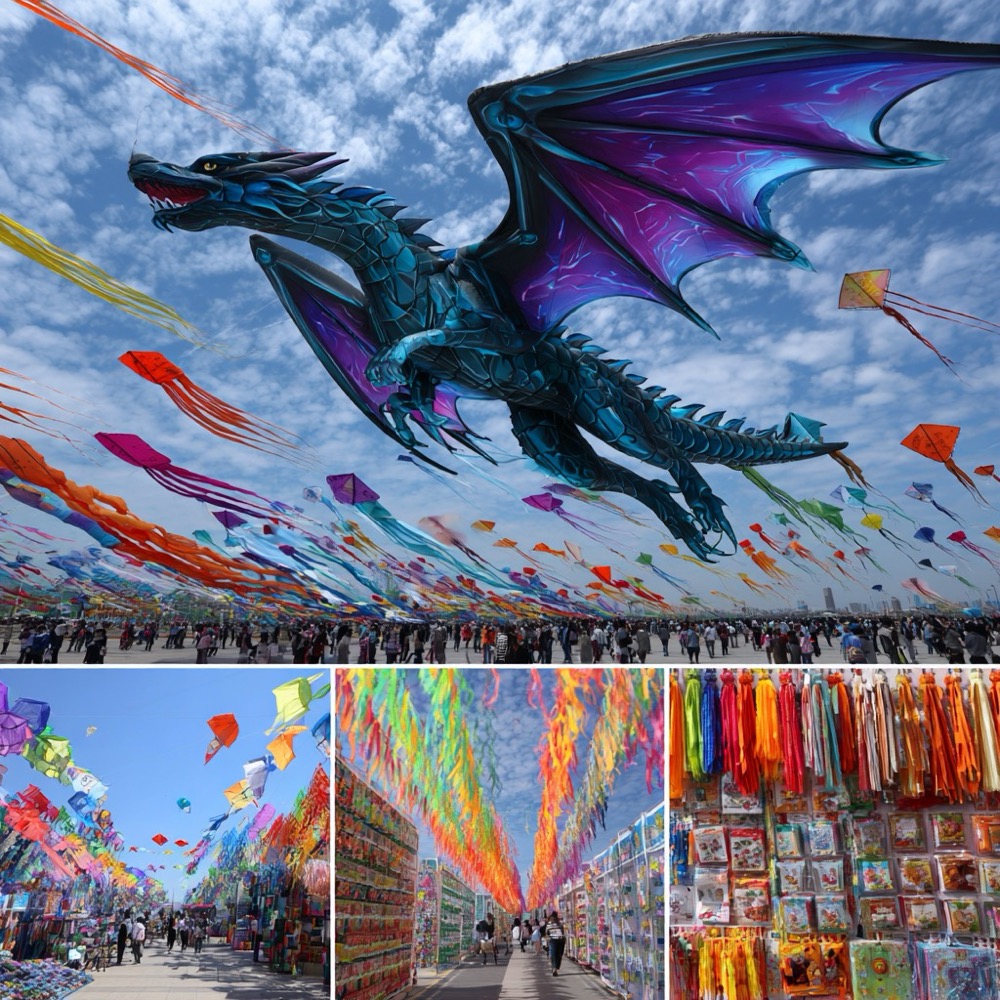
In the vivid world of traditional Chinese folk culture, kites, with their light posture of “paper as clothing, bamboo as bones, and string as soul”, carry the ancient Chinese yearning for the sky and love for life. This traditional craft, which combines bamboo frame binding, paper pasting, and painting decoration, has spanned over 2,000 years—from imperial court entertainment to folk festivals, from military use to artistic creation. Today, with their bright colors and agile figures, kites still convey the unique charm of China’s “kite culture” to the world.
The history of kites can be traced back to the Spring and Autumn and Warring States periods. Mozi “carved wood into a yuan (a kite-like device), spent three years making it, but it only flew for one day before failing”—this is the earliest recorded prototype of a kite in historical documents. At the end of the Warring States period, Lu Ban improved the material, using bamboo as the frame and silk as the surface to make a “wooden yuan” that could fly in the sky for a long time. In the Han Dynasty, after the invention of papermaking, “paper yuan” (paper kites) came into being, and kites gradually shifted from military reconnaissance tools (such as transmitting military information and measuring terrain) to folk entertainment. In the Tang Dynasty, kites were integrated into festival culture, and “flying paper kites” became a custom in spring. The poet Gao Pian once wrote the verse “In the quiet night, the string sounds echo in the blue sky; the musical notes drift with the wind freely”, depicting the vivid scene of kites flying. The Song Dynasty was the golden age of kite development. In the streets and lanes of Bianjing (the capital, now Kaifeng), flying kites in spring became a common practice. Kite designs also became more diverse, with bionic shapes such as butterflies, bees, and cranes appearing. Devices like “bells” and “bamboo flutes” were also invented, making kites “produce sounds as they soar”, adding fun. During the Ming and Qing dynasties, kite craftsmanship matured, forming four major schools: Beijing, Tianjin, Weifang, and Nantong. Each school, with its unique shapes and techniques, became a vivid carrier of regional culture.
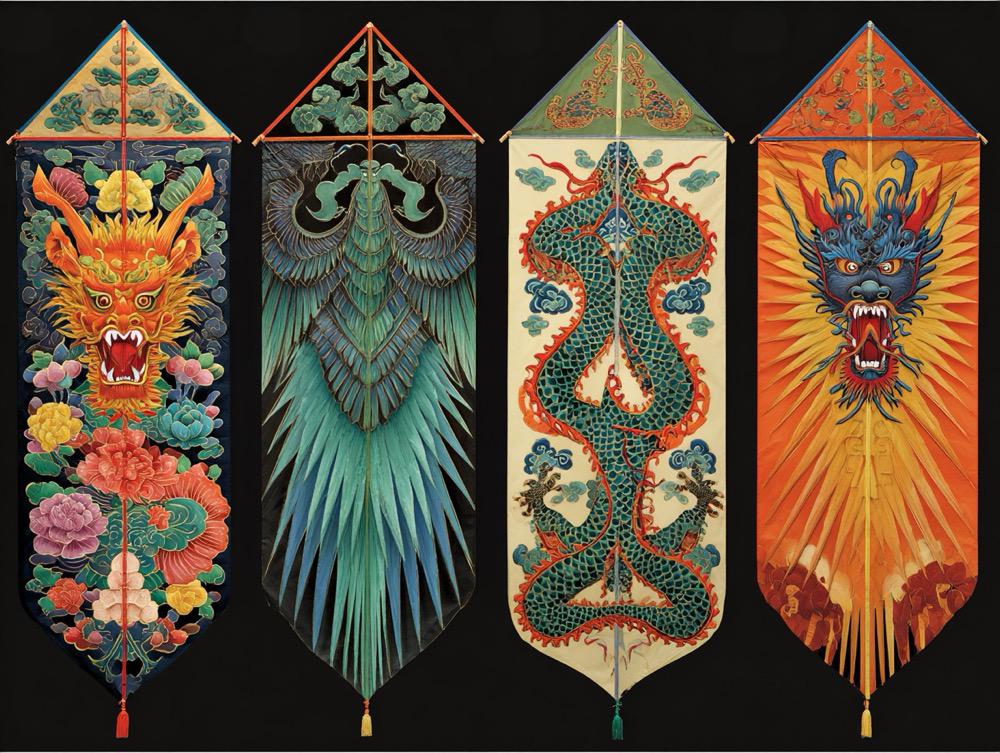
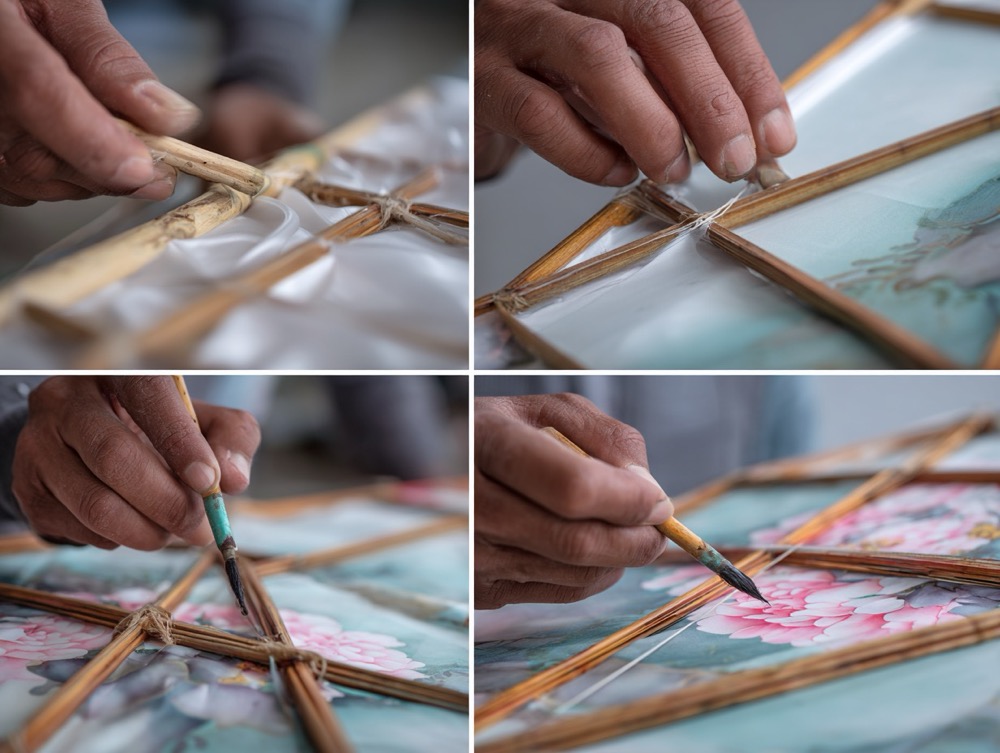
The charm of kites first lies in their exquisite production process of “one bamboo, one frame; one paper, one surface”. The core process is divided into four major steps: “binding (the frame), pasting (the surface), painting (the pattern), and flying”, each testing the craftsman’s ingenuity. “Frame binding” is the foundation: flexible moso bamboo or cinnamon bamboo is selected, processed into thin strips, bent by roasting, and bound into a frame. Different kite shapes require different frame structures—for example, the “diamond frame” of the Beijing Swallow Kite is stable and easy to fly, while the “long string frame” of the dragon-shaped kite is agile and elegant. “Surface pasting” requires choosing paper or silk according to the kite shape: paper kites mostly use tough Xuan paper or leather paper, while silk kites use light silk gauze. During pasting, it is necessary to ensure “flatness without wrinkles and proper tightness” to make the kite bear force evenly. “Painting” is the soul of the kite: craftsmen paint patterns on the surface with pigments, covering themes such as auspicious patterns (e.g., bats symbolizing good fortune, peonies representing prosperity), folk stories (e.g., “Chang’e Flying to the Moon”, “Ne Zha Conquering the Sea”), and natural scenery (e.g., landscapes, flowers, and birds). The “gongbi (meticulous brushwork) painting” on Beijing Swallow Kites is delicate and exquisite, while the “heavy-color filling” on Weifang Dragon-Head Centipede Kites is bright and striking. “Flying” requires adjusting the spool and angle according to the wind force to make the kite soar stably in the sky, which is a combination of skill and experience.
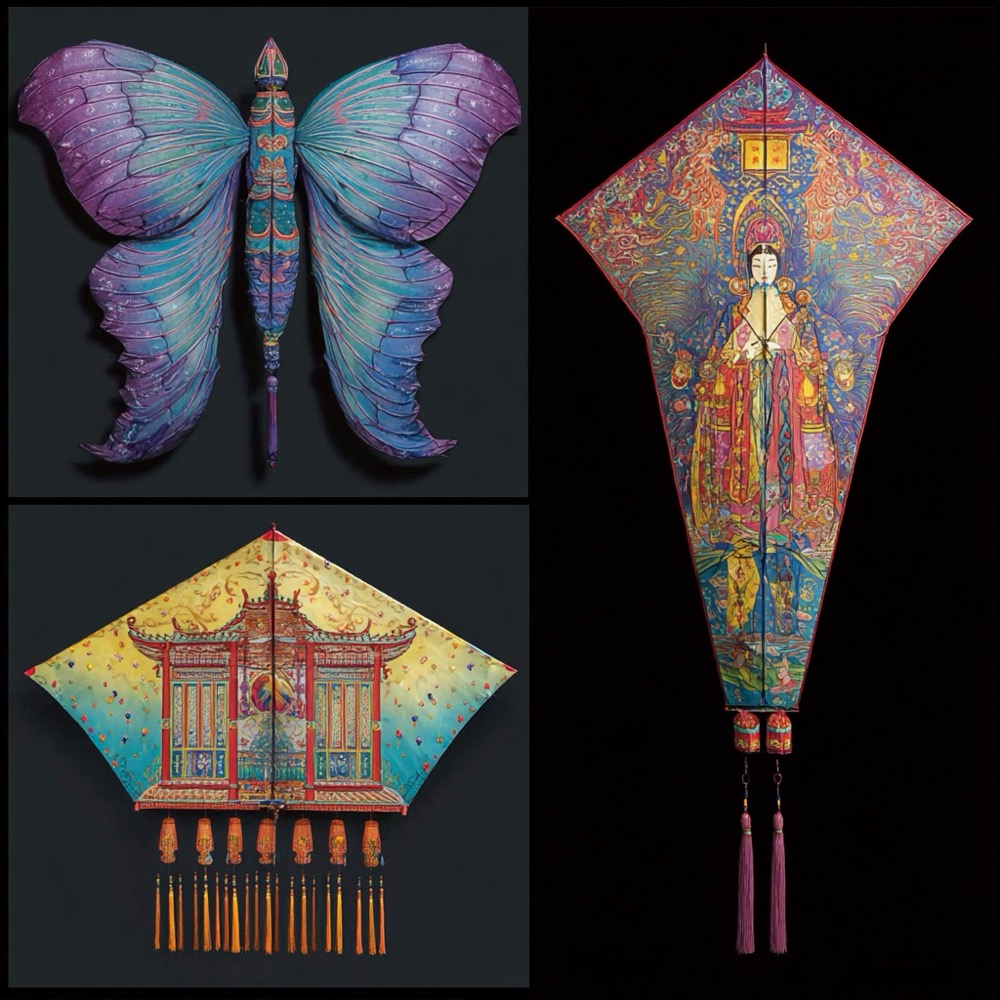
Kites come in a wide variety, and schools from different regions have their own characteristics, showing rich cultural diversity. Beijing Swallow Kites are famous for “simple shapes and auspicious meanings”: “fat swallows” symbolize good fortune, “thin swallows” represent agility, and patterns like “five blessings surrounding longevity” and “surplus year after year” on their wings convey aspirations for a better life. Tianjin Soft-Wing Kites are characterized by “flexible wings and agile flight”: kite shapes like butterflies and dragonflies have wings that can swing with the wind, as if they are alive. Weifang Kites are known for “largeness and exquisiteness”: the “Dragon-Head Centipede” kite can be hundreds of meters long, composed of dozens of sections, and when flying, it hovers in the sky like a giant dragon, known as a “sky spectacle”. Nantong Board Kites are famous for “both sound and shape”: dozens of whistles of different sizes are installed on the kite, and when flying, they make a “whirring” sound that can be heard for miles.
Kites are not only entertainment tools but also carry profound cultural significance. Among the people, flying kites in spring has the custom of “releasing bad luck”: people write their troubles on the kite, fly it, and then cut the kite string, implying “taking away disasters and ushering in good luck”. The patterns and shapes of traditional kites contain rich folk symbols—for example, the “Eight-Trigram Kite” symbolizes warding off evil and praying for blessings, and the “Double Fish Kite” represents surplus year after year. These have all become important carriers for studying folk culture. At the same time, kites are messengers of cultural exchange between China and foreign countries. As early as the Tang Dynasty, kites were introduced to Central Asia and Europe along the Silk Road, becoming an important symbol of Oriental culture.
In modern times, kites have not faded with the changes of the times but have gained new vitality through inheritance and innovation. On one hand, traditional kite craftsmanship is systematically protected: in 2006, “Weifang Kite-Making Technique” was included in the National Intangible Cultural Heritage List. Kite museums and inheritance bases have been established in various places, and veteran craftsmen pass down binding and painting techniques to the younger generation through the “master-apprentice” model. On the other hand, innovations in kites continue to emerge: artists integrate modern materials (such as carbon fiber and nylon cloth) into kite making, making kites lighter and more durable; design new kites with sci-fi themes and anime characters to attract young people; hold international kite festivals (such as the Weifang International Kite Festival), inviting kite lovers from around the world to participate, which has become a platform for cultural exchange between China and foreign countries.